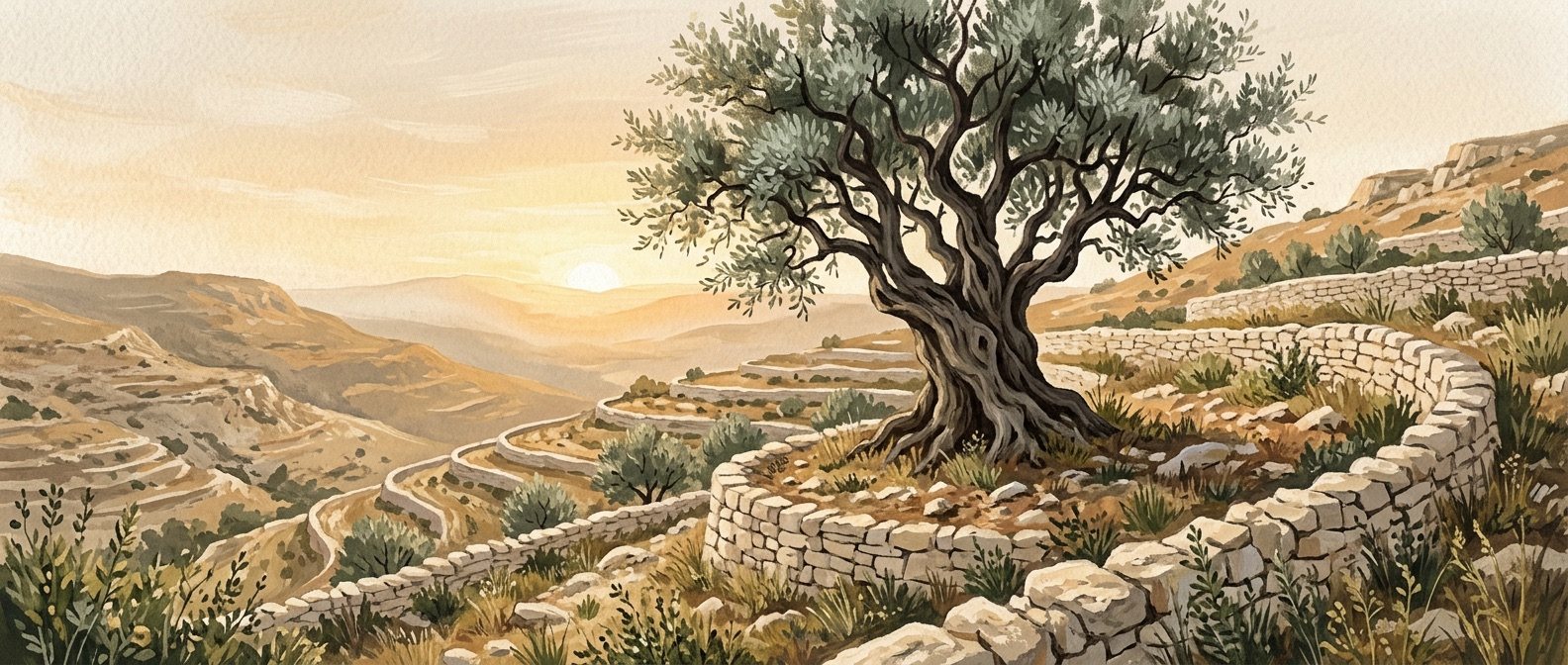
Illustration: an olive tree on a terraced hillside at dawn

فلسطين

Palestine

A timeline, from the first walled towns to the present day. The page darkens as the history does.

Scroll

I

Ancient land

c. 3000 BCE to 135 CEThe land takes its name.
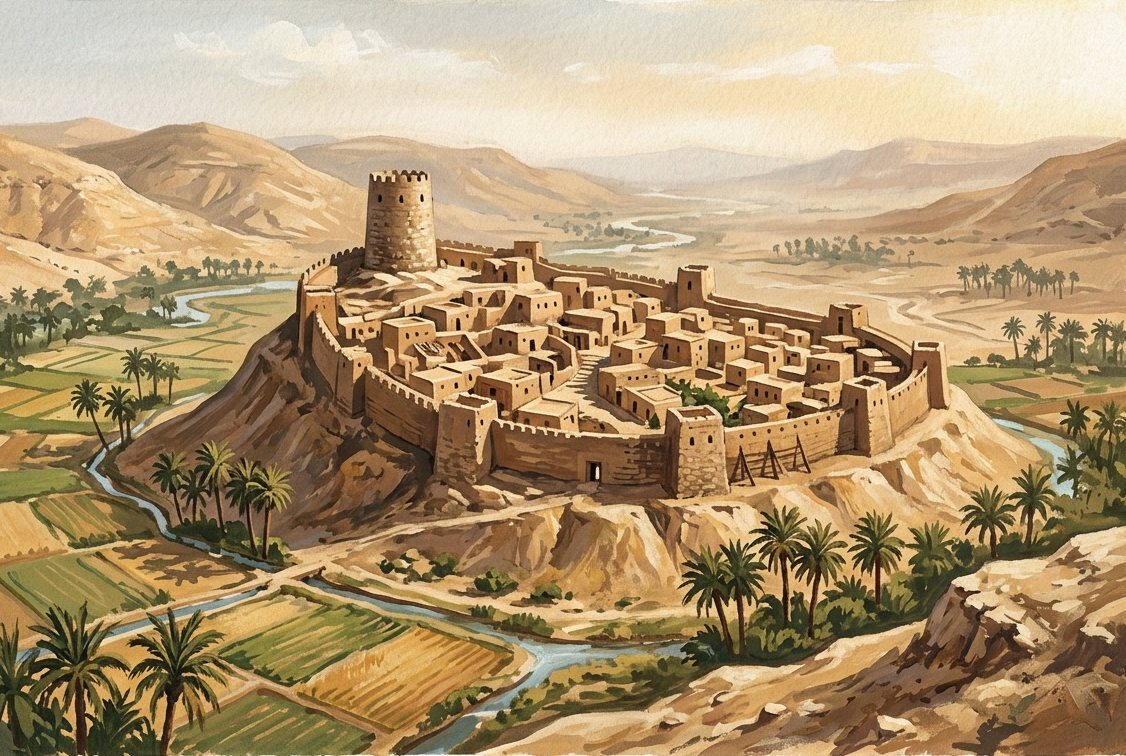
Illustration: a Bronze Age walled town in the Jordan valley
Jericho, in the Jordan valley

c. 3000 BCE

Canaan

Jericho has been lived in for around ten thousand years, which makes it one of the oldest towns on earth. Through the Bronze Age the land between the sea and the river was Canaan: walled city-states such as Megiddo, Hazor, Gezer and Jerusalem, trading olive oil, wine and grain with Egypt and Mesopotamia. The olive terraces were already being built.
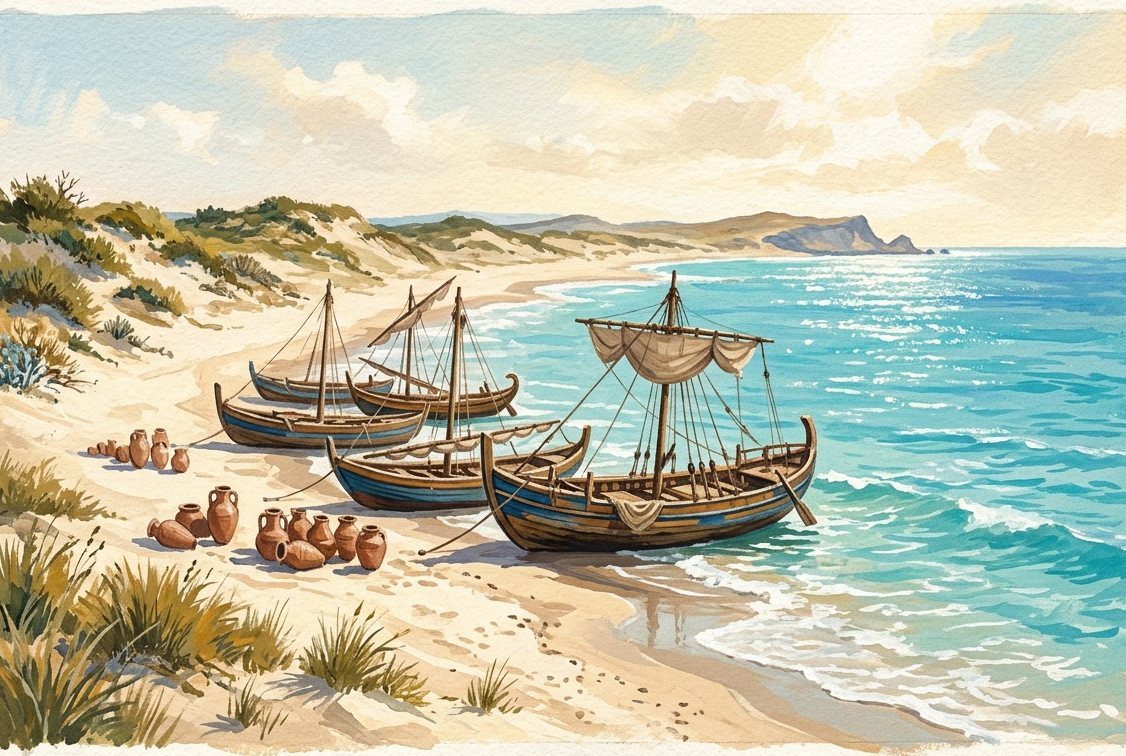
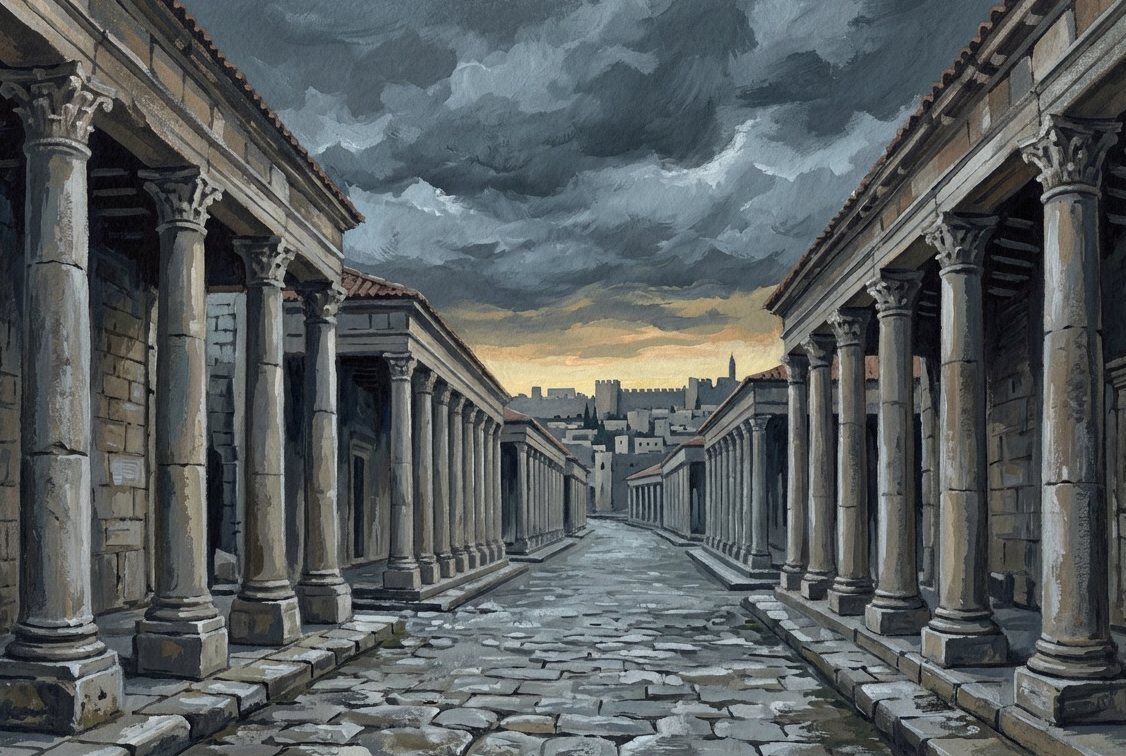
Illustration: ships drawn up on an ancient Mediterranean shore
The coast near Gaza

c. 1150 BCE

The Philistines, and a name

Sea peoples the Egyptians called the Peleset settled the southern coast and built five cities: Gaza, Ashkelon, Ashdod, Ekron and Gath. From their Philistia the Greeks made Palaistinē; Herodotus was using the word in the fifth century BCE for the whole coast and its hinterland. The name has been on the map for two and a half thousand years.

Illustration: an empty Roman colonnaded street under storm clouds
The Roman cardo, Jerusalem

135

Syria Palaestina

After crushing the Bar Kokhba revolt, the emperor Hadrian folded Judaea into a province he named Syria Palaestina and rebuilt Jerusalem as a Roman colony, Aelia Capitolina, from which Jews were barred. The Roman name passed to the Byzantines, and from them into Arabic as Filastin.

II

Faiths and empires

326 to 1516Byzantines, caliphs, crusaders, sultans.
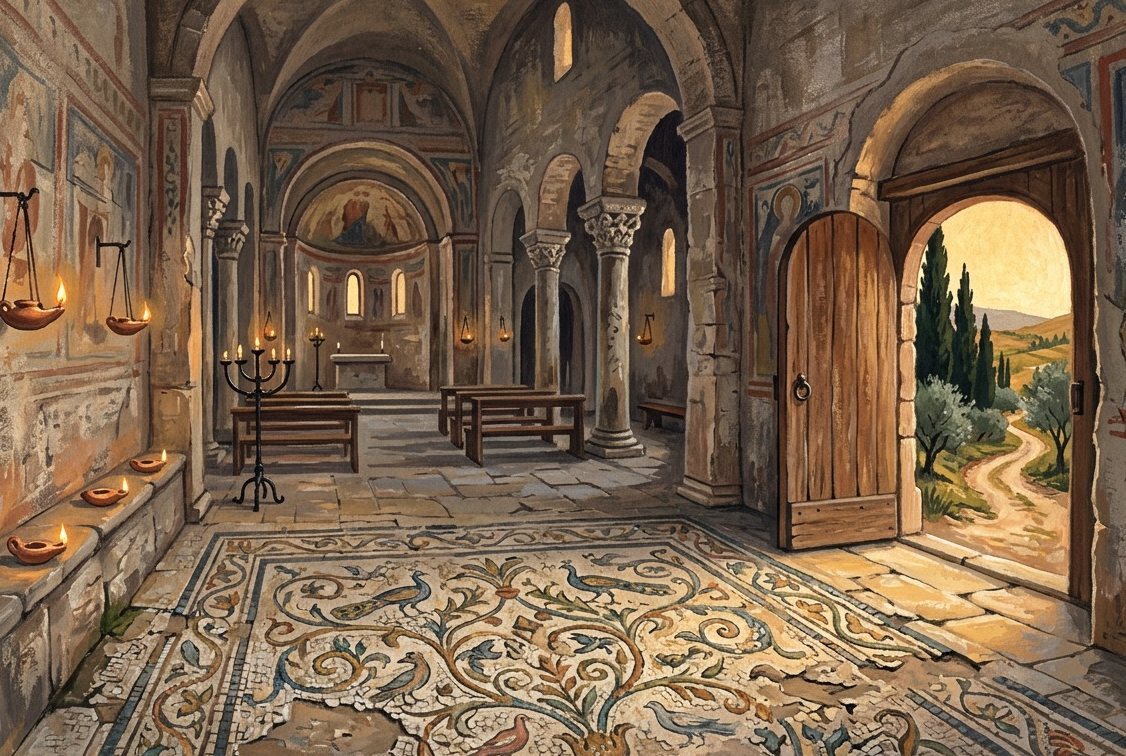
Illustration: a Byzantine basilica with a mosaic floor and oil lamps
A basilica of the pilgrim centuries

326

The Byzantine centuries

Under Constantine's mother Helena, Jerusalem's churches rose over the sites of the Passion, and the Church of the Holy Sepulchre was dedicated in 335. For three centuries Palestine was a Christian land of monasteries, mosaic floors and pilgrim roads, its people speaking Aramaic and Greek.

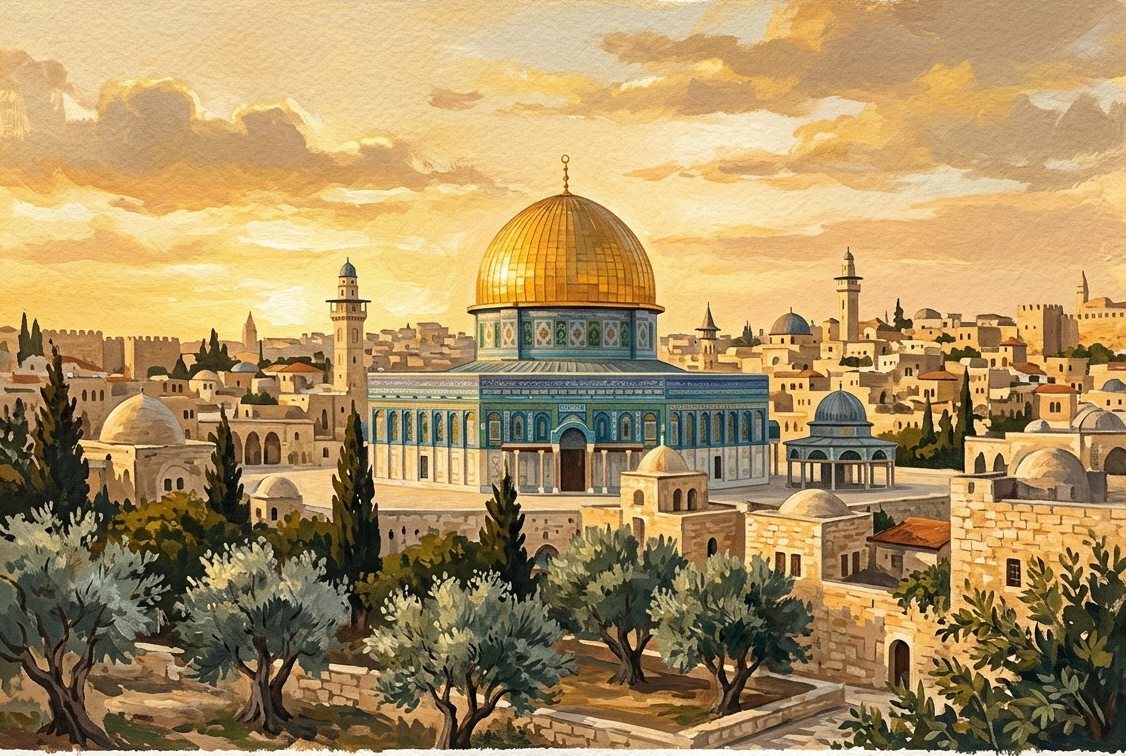
Illustration: the Dome of the Rock at golden hour
The Dome of the Rock, completed 691

638

Umar enters Jerusalem

The caliph Umar ibn al-Khattab accepted the city's surrender from its patriarch, Sophronius, and by tradition guaranteed the safety of its Christians and their churches. In 691 the Umayyads completed the Dome of the Rock. Over the following centuries Arabic became the language of the land and Islam the faith of most of its people, alongside Christian and Jewish communities that never left.

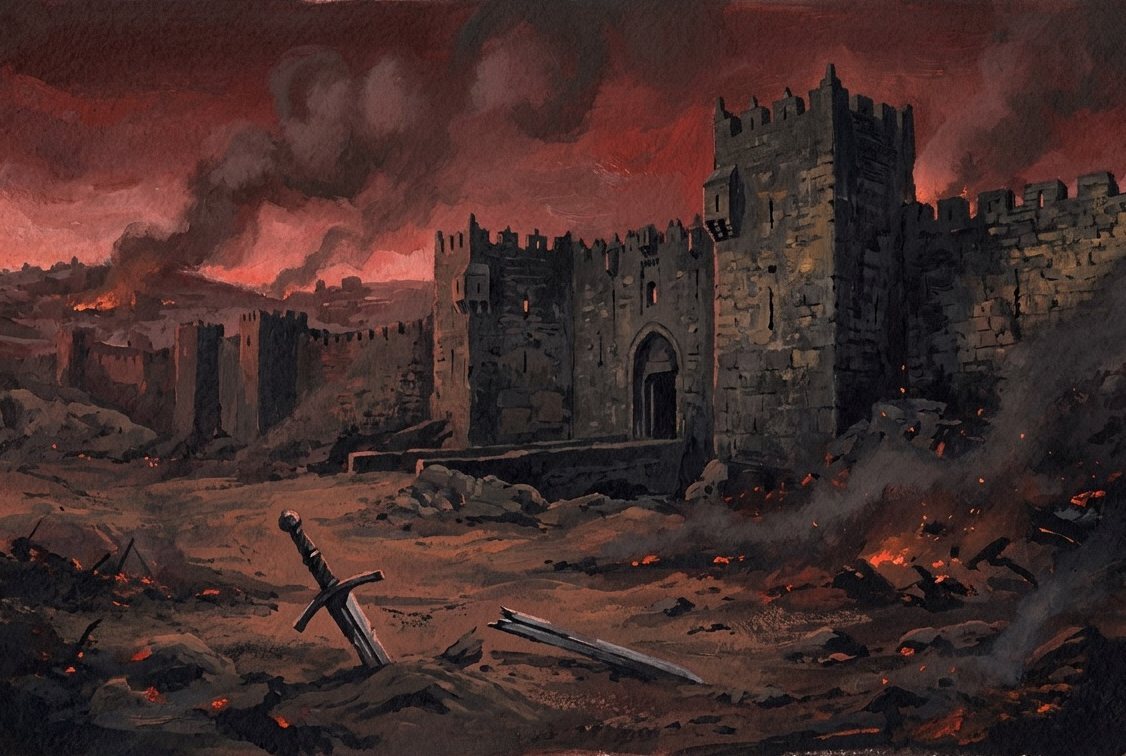
Illustration: medieval city walls under smoke at dusk
The walls after the siege

1099

Crusaders and Saladin

On 15 July 1099 the armies of the First Crusade took Jerusalem and killed most of its Muslim and Jewish inhabitants. For most of a century a Latin kingdom ruled from the city. In 1187, after the battle of Hattin, Saladin took Jerusalem back and let its people ransom themselves rather than repeat the slaughter.

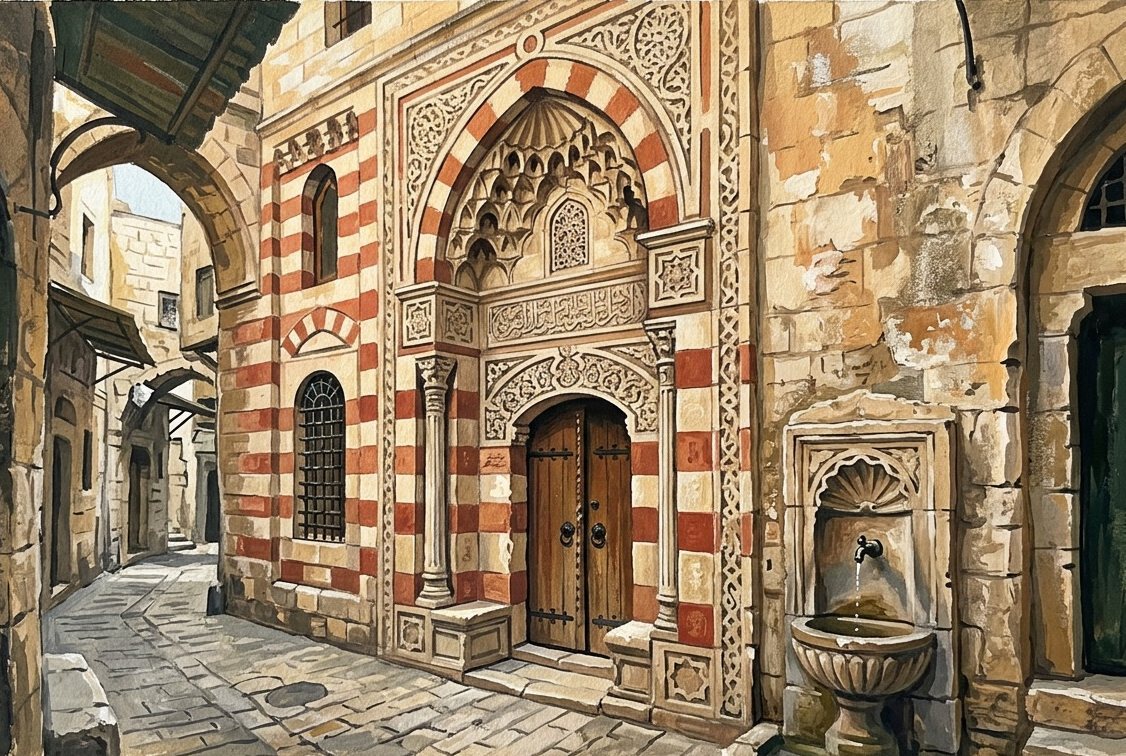
Illustration: a Mamluk madrasa facade with striped stonework
Mamluk stonework in the Old City

1291

The Mamluks

Sultans ruling from Cairo drove the last Crusaders from Acre in 1291 and spent the next two centuries endowing Jerusalem with madrasas, hospices and fountains. Much of the stone fabric of the Old City that visitors walk through today is Mamluk.

III

Ottoman centuries

1516 to 1917Four hundred years of one empire.
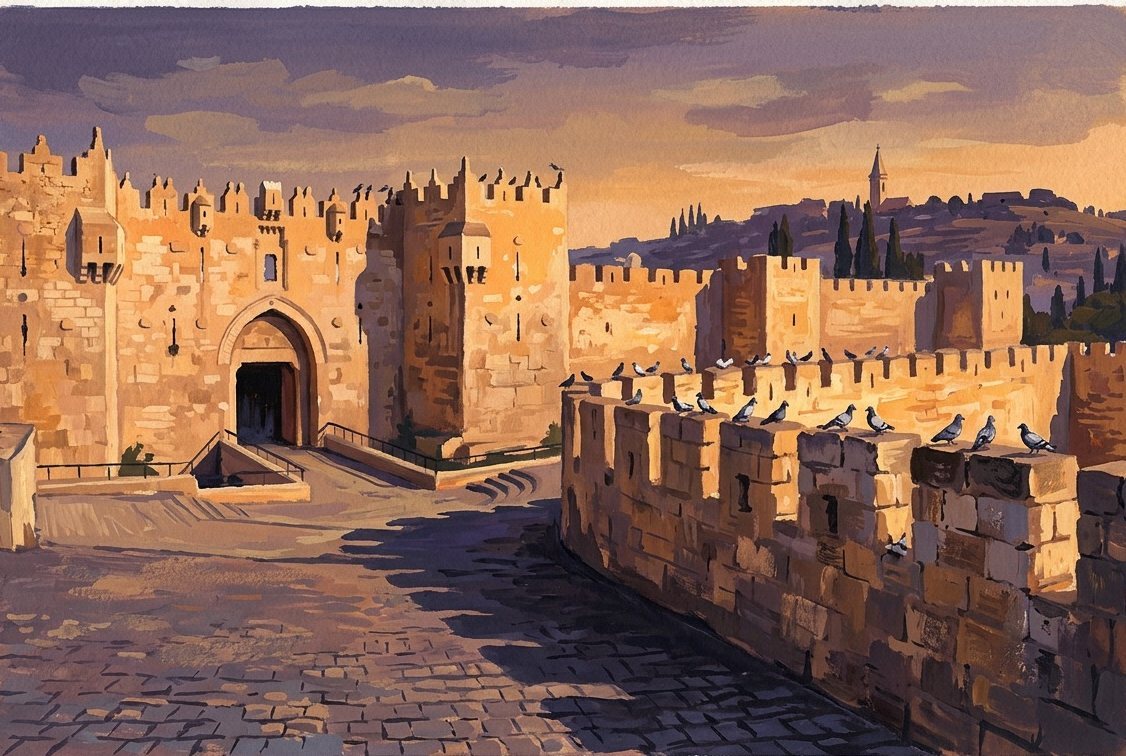
Illustration: the Ottoman walls of Jerusalem and Damascus Gate in late light
Damascus Gate

1516

The Ottomans arrive

Selim I defeated the Mamluks at Marj Dabiq and Palestine passed to the Ottoman Empire, where it stayed for four hundred years. His son Suleiman rebuilt the walls of Jerusalem between 1537 and 1541. They are the walls that stand today.

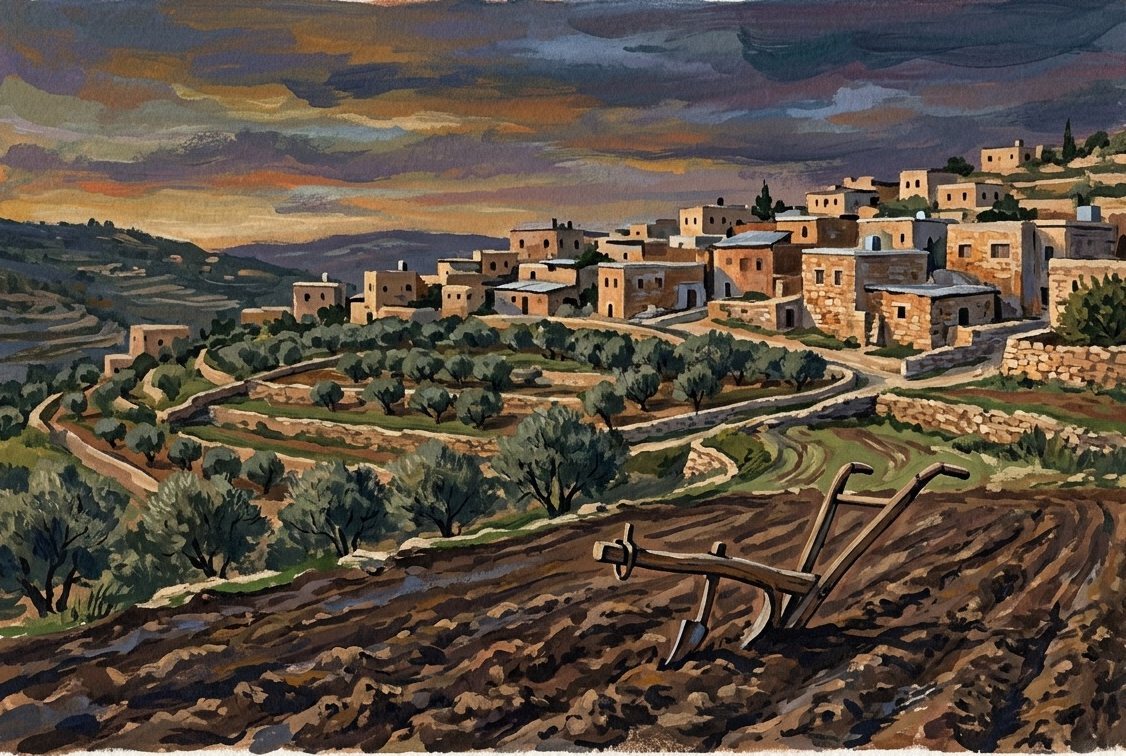
Illustration: a hill village near Nablus under a threatening dusk sky
The hills of Nablus

1834

The peasants' revolt

When Muhammad Ali of Egypt, then ruling the province, imposed conscription and new taxes, the villagers of the Nablus, Hebron and Jerusalem hills rose together. The revolt was put down harshly. Historians often point to it as an early moment when the people of Palestine acted as one.

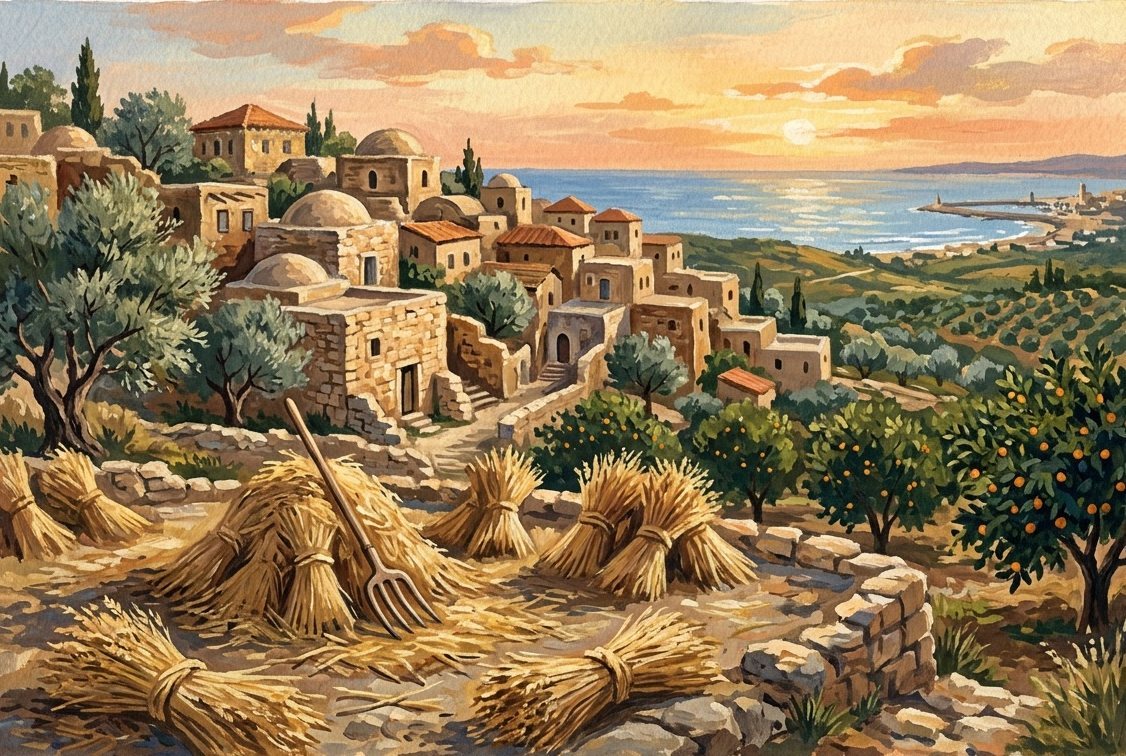
Illustration: a Palestinian village at harvest with orange groves beyond
Harvest, with Jaffa on the horizon

1882

Village life, and the first settlers

Late Ottoman Palestine held roughly half a million people, overwhelmingly Arab, Muslim and Christian, with small Jewish communities in the holy cities. From 1882 Zionist settlers began arriving from Europe and buying land, often from absentee landlords, so that the tenant farmers who had worked it were turned off. Jaffa's oranges were shipped to Liverpool.

IV

The Mandate

1917 to 1947A promise made over the heads of the people who lived there.
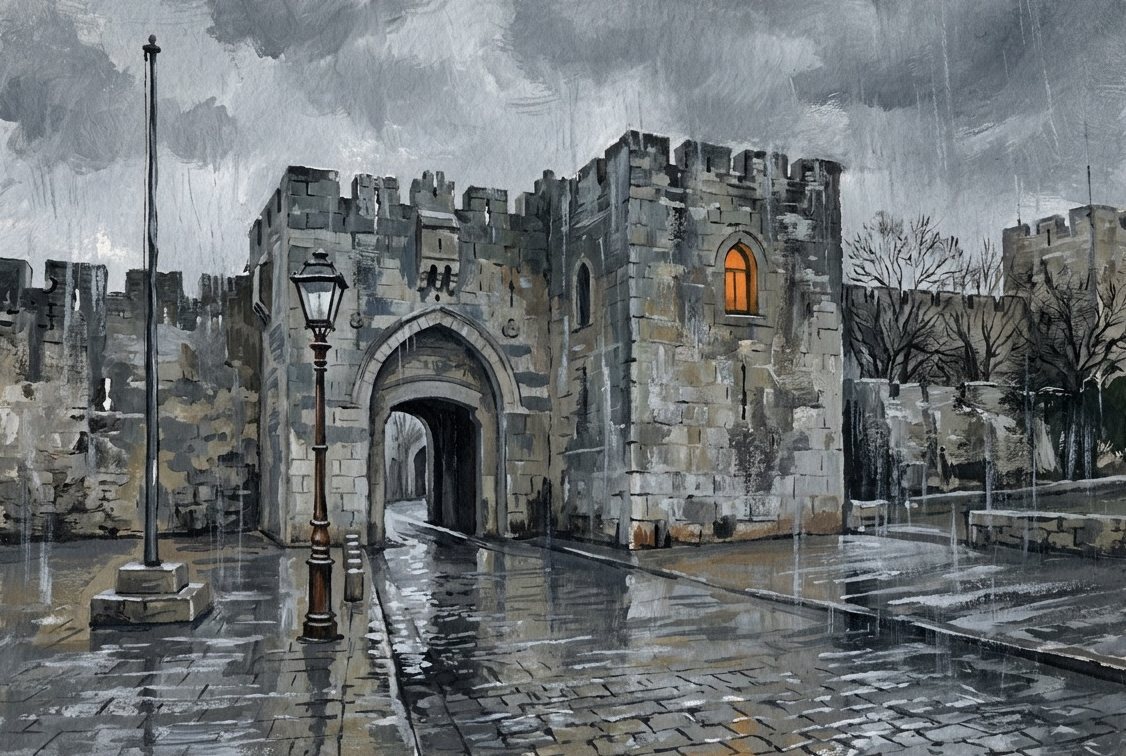
Illustration: Jaffa Gate in winter rain
Jaffa Gate, December 1917

1917

The Balfour Declaration

On 2 November 1917 the British foreign secretary, Arthur Balfour, wrote that his government viewed "with favour the establishment in Palestine of a national home for the Jewish people", provided nothing prejudiced the civil and religious rights of the "existing non-Jewish communities". Those communities were about nine in ten of the population. Five weeks later British troops entered Jerusalem.

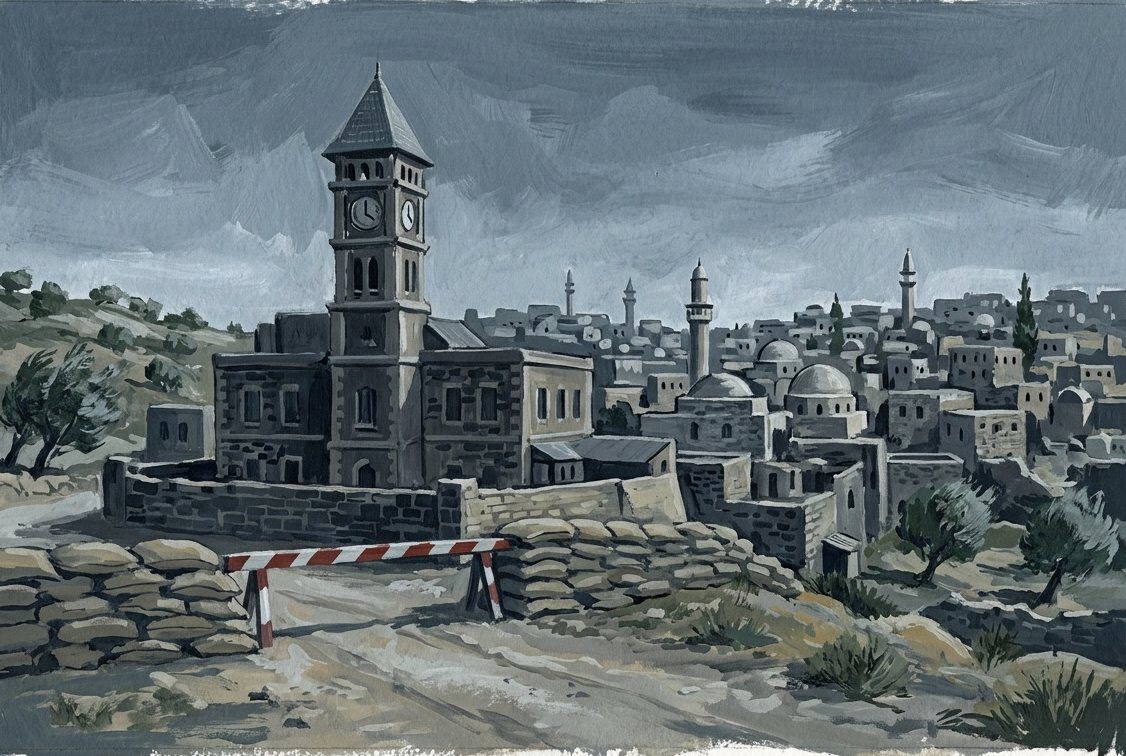
Illustration: a colonial administrative building behind sandbags
The Mandate administration

1922

The Mandate

The League of Nations confirmed Britain's Mandate over Palestine and wrote the Balfour promise into its terms. Palestinians petitioned, struck and formed congresses; their demand for a representative government was refused. As persecution in Europe grew in the 1930s, Jewish immigration rose sharply, and with it the fear of dispossession.

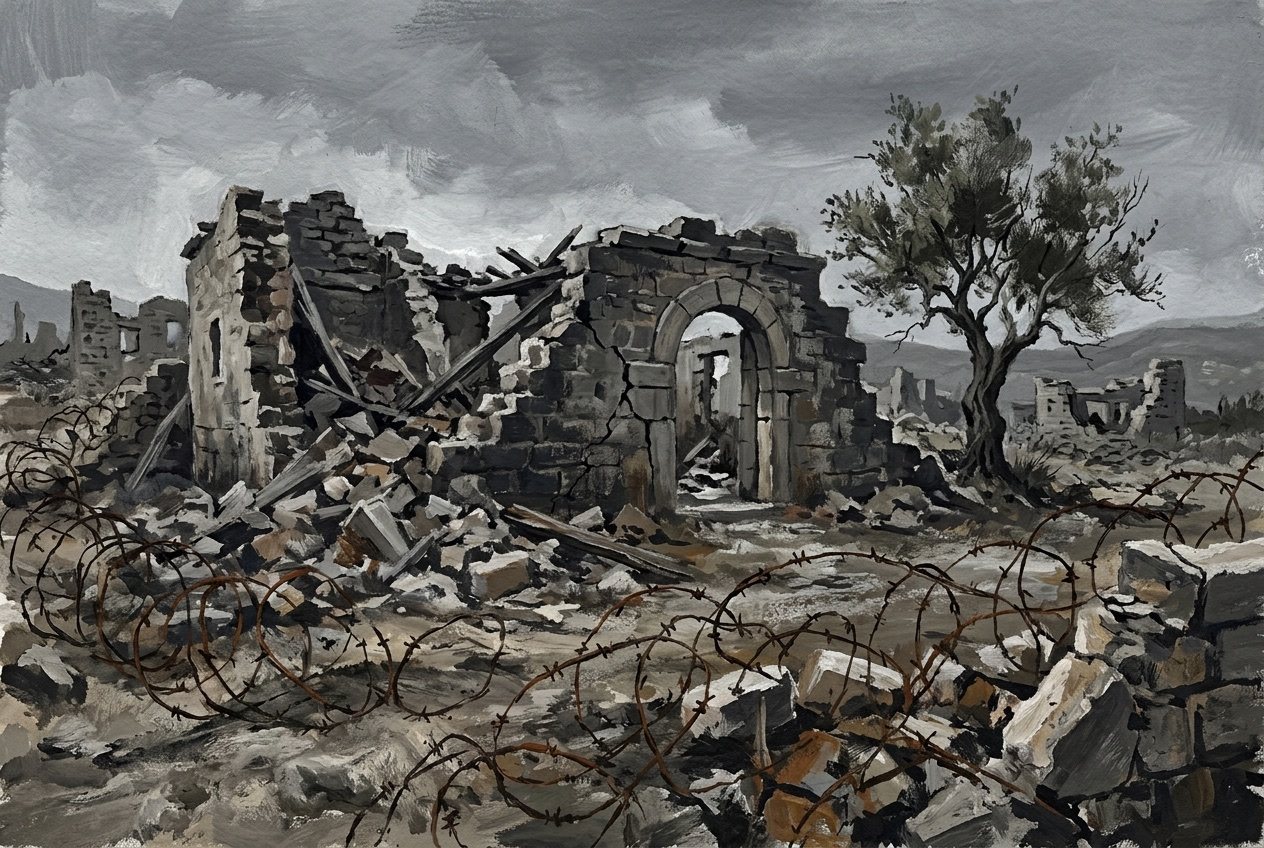
Illustration: a demolished stone house with barbed wire and one olive tree
A demolished house, 1938

1936

The Great Revolt

A six-month general strike became a three-year armed uprising against British rule and Zionist immigration. Britain answered with collective punishment, house demolitions and mass detention. Around five thousand Palestinians were killed, their leaders were exiled or imprisoned, and Palestinian society went into 1948 already broken.

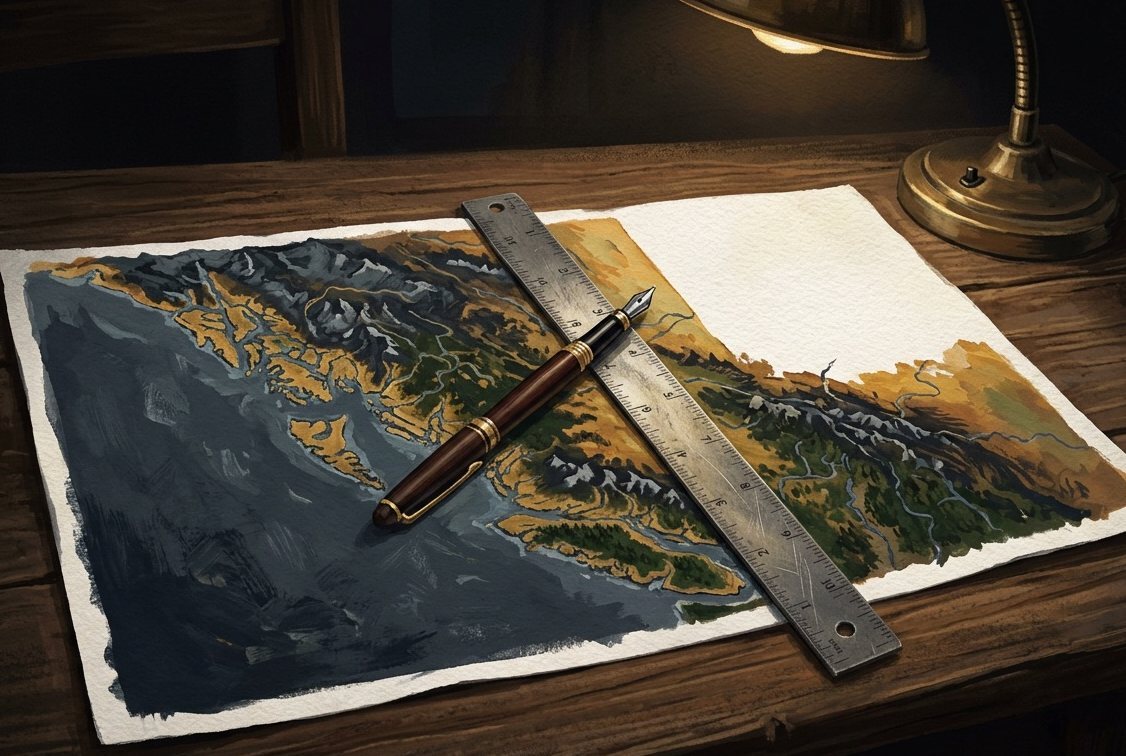
Illustration: a map on a desk with a ruler and pen dividing it
Resolution 181

1947

Partition

On 29 November the UN General Assembly voted for Resolution 181, dividing Palestine into a Jewish state on about 56 per cent of the land and an Arab state on about 43, with Jerusalem under international rule. Jews were then a third of the population and owned around seven per cent of the land. Arab leaders rejected the plan. Fighting began within days.

V

Nakba

1948 to 1967The catastrophe, and what followed.
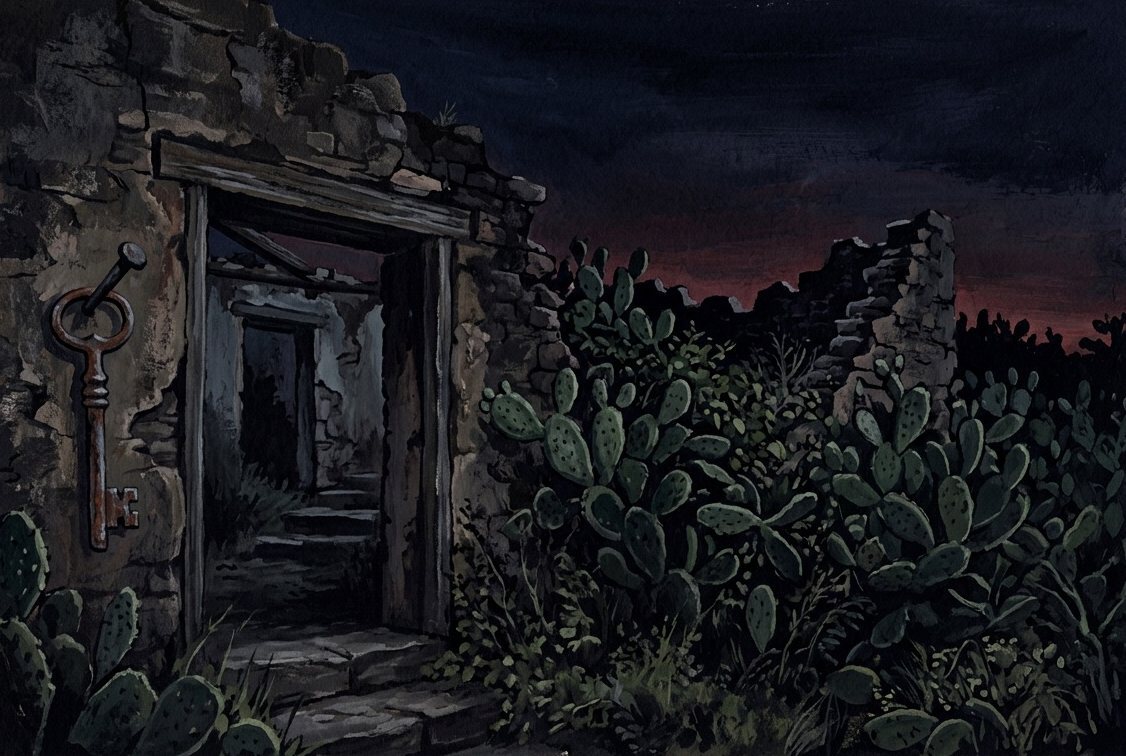
Illustration: an iron key hanging beside the doorway of a ruined stone house
The key

1948

The Nakba

Between late 1947 and 1949, more than 700,000 Palestinians, over half of the Arab population, fled or were driven from their homes. More than 400 villages were emptied and most were later demolished. Massacres such as Deir Yassin, on 9 April, spread the flight. Israel declared its independence on 14 May. Palestinians call it al-Nakba, the catastrophe. Families took their house keys with them, expecting to be back within weeks.

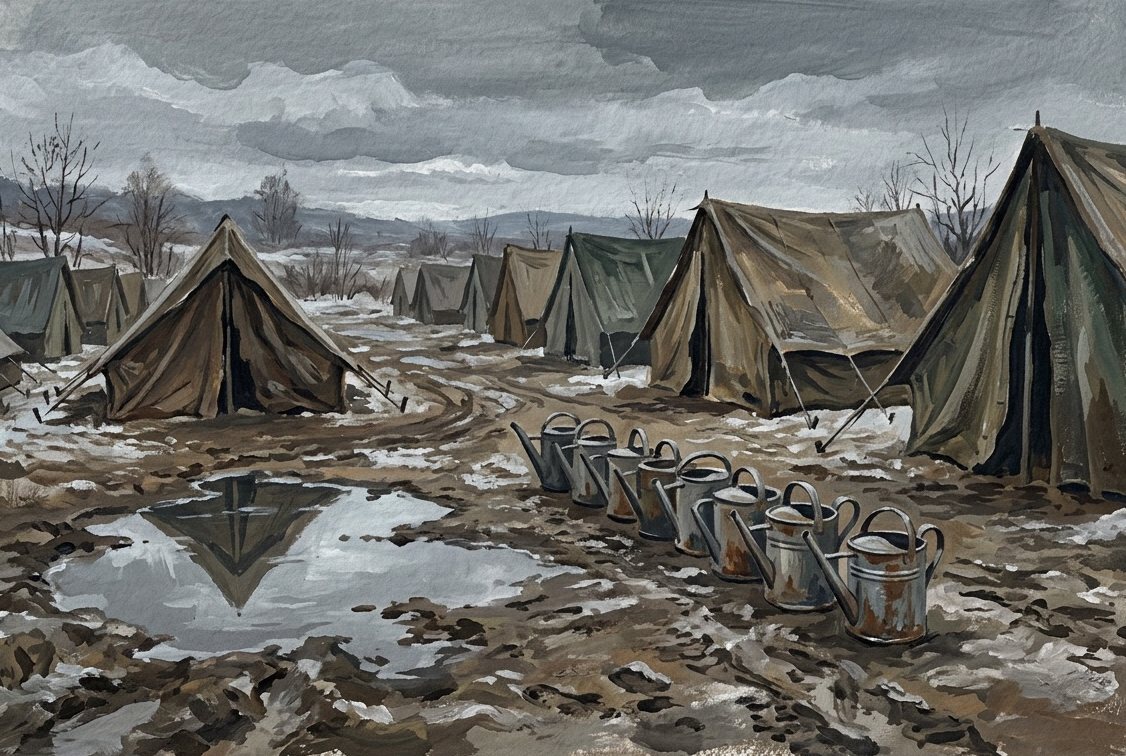
Illustration: rows of canvas tents on bare ground under a winter sky
A camp, winter 1949

1949

The camps

The armistice lines left Israel with 78 per cent of Mandate Palestine; Jordan held the West Bank and Egypt administered Gaza. Israel barred the refugees from returning. In December the UN created UNRWA to feed and school them, and Resolution 194 affirmed their right to return home or be compensated. Tents became breeze-block. Today UNRWA registers around 5.9 million Palestine refugees.

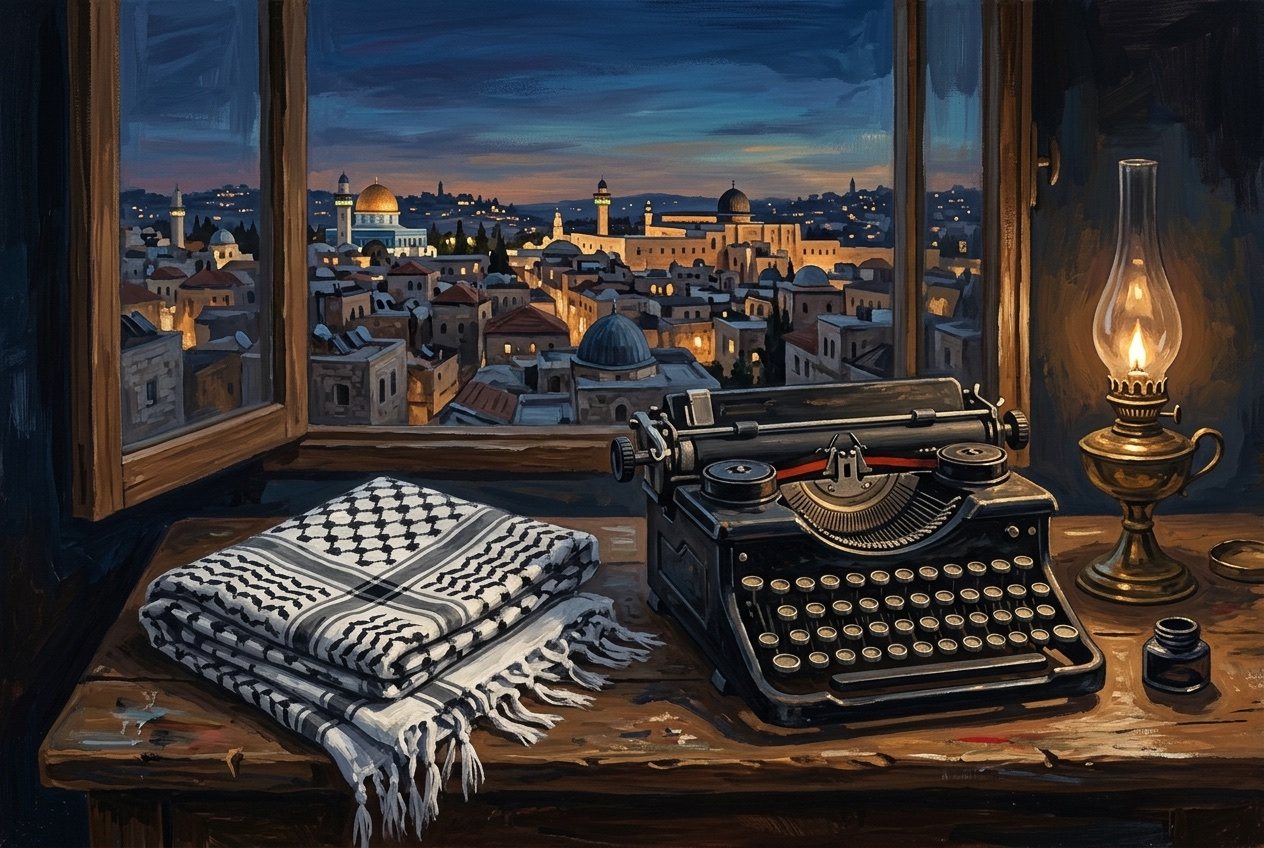
Illustration: a folded keffiyeh on a desk beside a typewriter
A desk in Jerusalem

1964

The PLO

The Palestine Liberation Organization was founded in Jerusalem. After 1967 it passed to the guerrilla movements led by Yasser Arafat, and in 1974 the Arab League and the UN recognised it as the representative of the Palestinian people. For the first time since 1948 there was a Palestinian voice in the room.

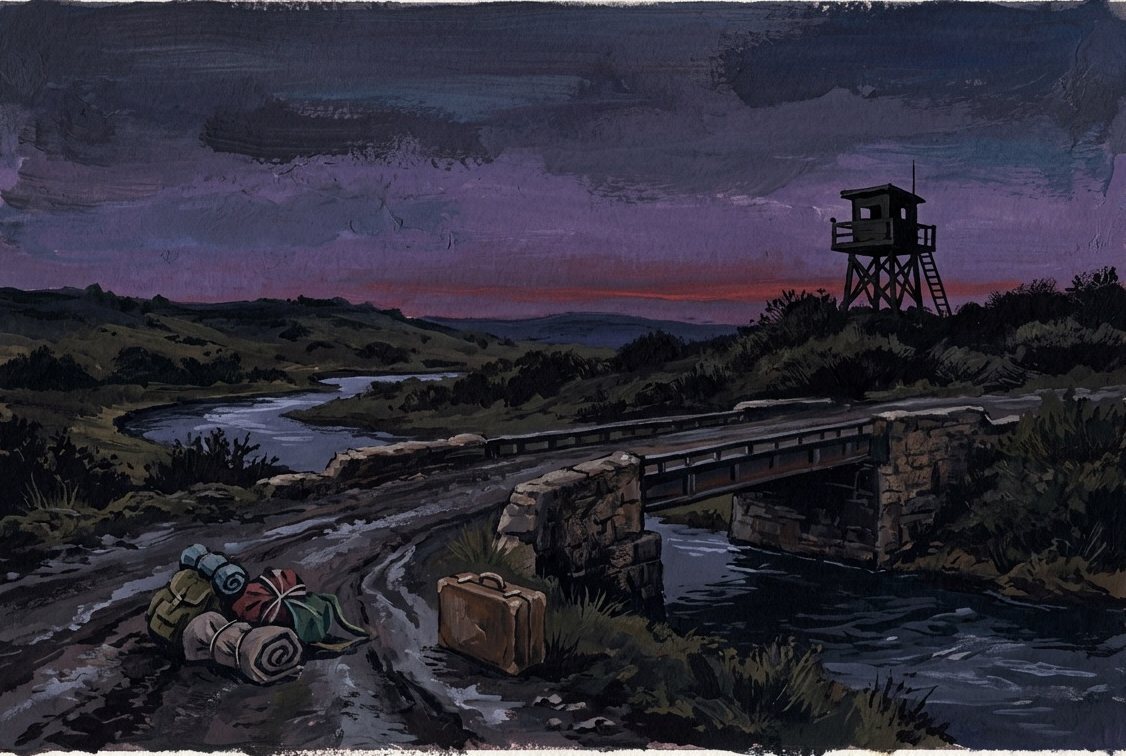
Illustration: a bridge over the Jordan at twilight with abandoned luggage
The bridge over the Jordan

1967

The Naksa

In six days in June, Israel captured the West Bank, East Jerusalem, Gaza, Sinai and the Golan Heights. Around 300,000 Palestinians were displaced, many for the second time. Military occupation began, and with it settlement, which the UN Security Council and the International Court of Justice have found to be unlawful. It has now lasted longer than most Palestinians have been alive.

VI

Uprising, and the long peace process

1987 to 2012Two intifadas, one handshake.
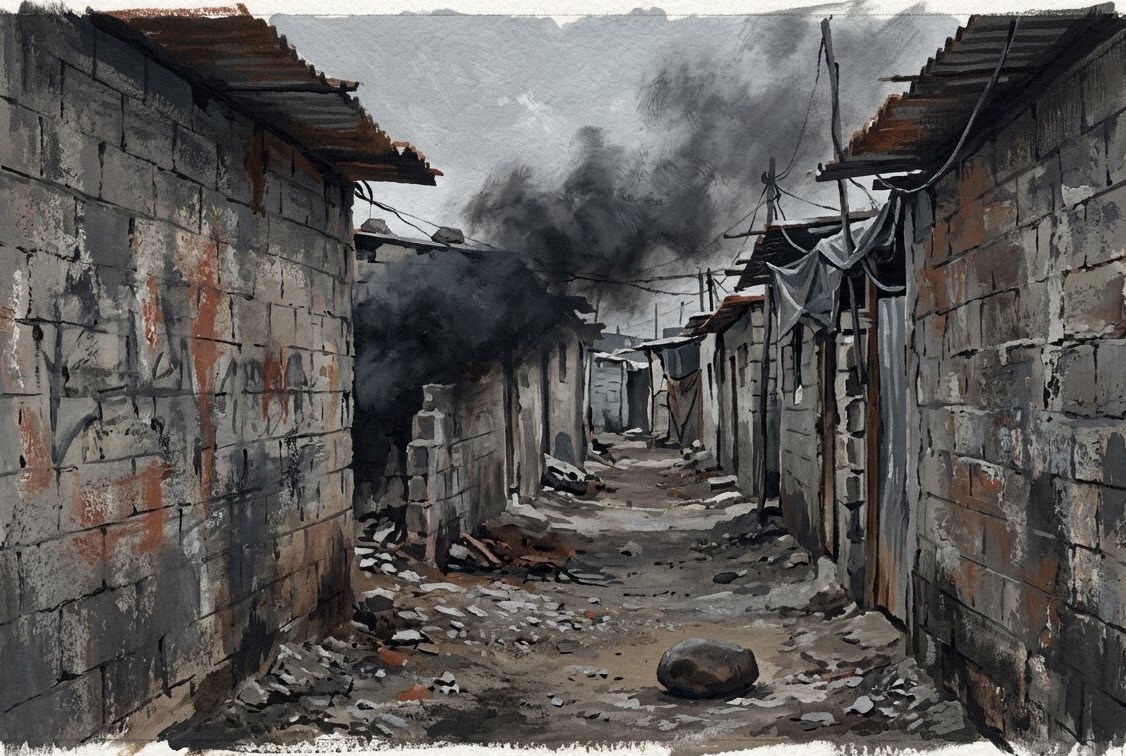
Illustration: a narrow camp alley with smoke drifting across
Jabalia camp

1987

The first intifada

It began in Jabalia camp in December, after an Israeli truck killed four workers, and spread across Gaza and the West Bank: strikes, boycotts, tax refusal, stones against soldiers, neighbourhood committees. Over six years more than a thousand Palestinians were killed and tens of thousands detained. The uprising put Palestinian self-determination back on the world's agenda.

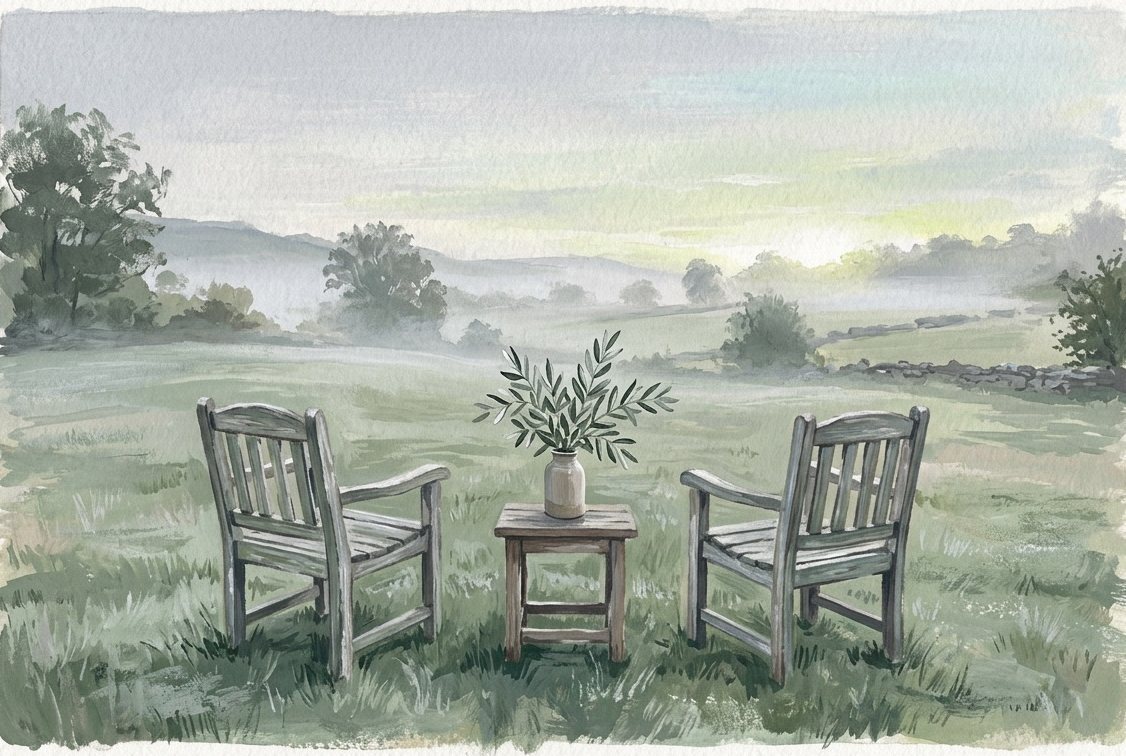
Illustration: two empty chairs facing each other on a misty lawn
The White House lawn

1993

Oslo

Yitzhak Rabin and Yasser Arafat shook hands on the White House lawn. The Palestinian Authority was created to run parts of the West Bank and Gaza, carved into Areas A, B and C, with the hard questions (borders, Jerusalem, refugees, settlements) deferred to talks that were meant to end in 1999. They never concluded. The settler population roughly doubled in the Oslo years.

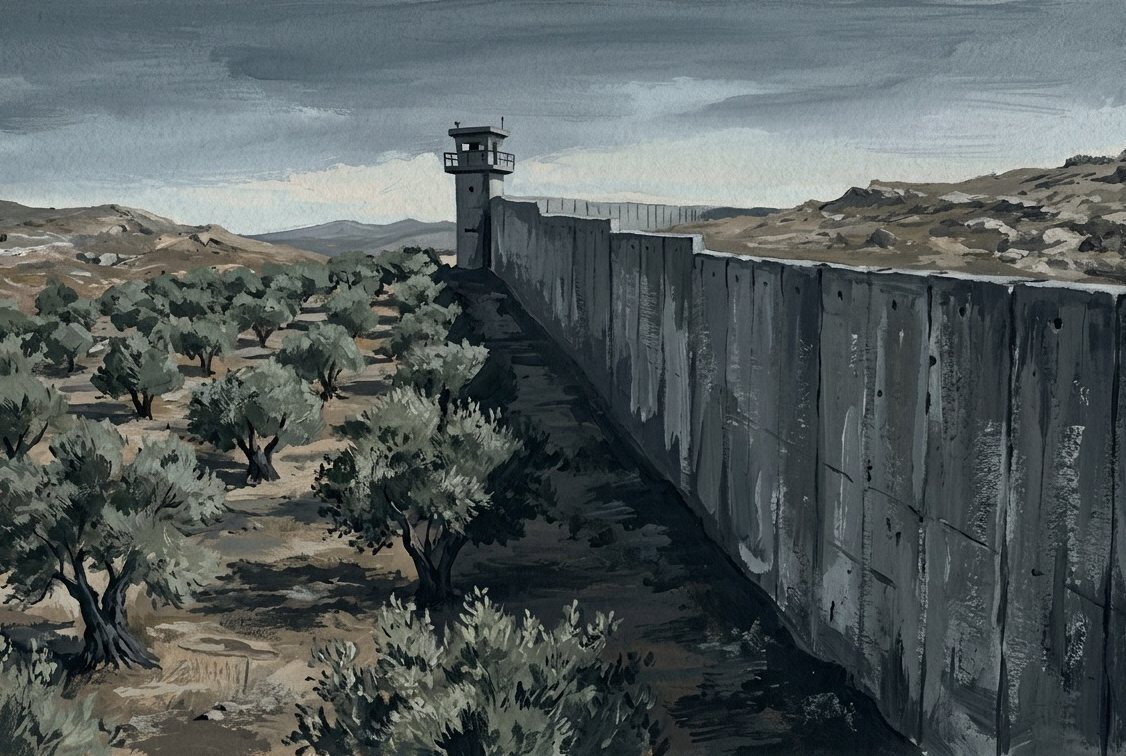
Illustration: a concrete wall cutting through an olive grove
The barrier, near Bethlehem

2000

The second intifada, and the wall

Sparked in September 2000 after Ariel Sharon's visit to the al-Aqsa compound, the second uprising was far bloodier than the first: around 3,000 Palestinians and 1,000 Israelis were killed. In 2002 Israel began building a barrier through the West Bank. The International Court of Justice ruled in 2004 that where it runs inside occupied territory it is contrary to international law.

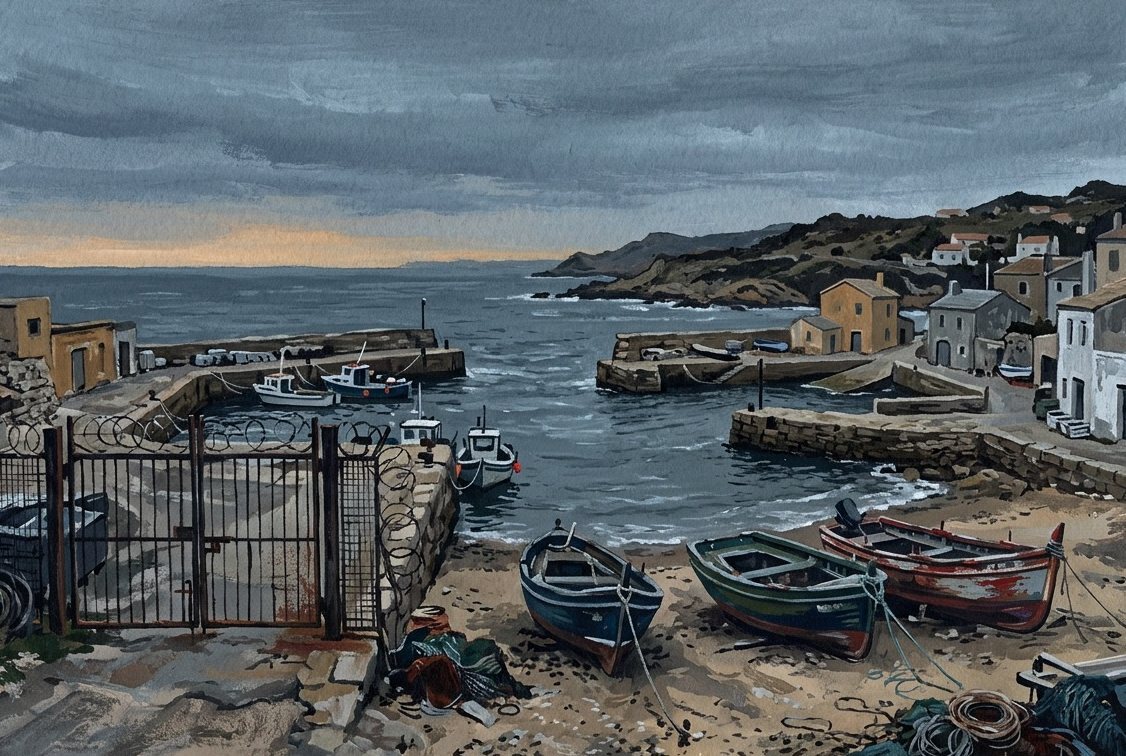
Illustration: beached fishing boats behind a closed steel gate
Gaza harbour

2007

Gaza sealed

Israel withdrew its settlers from Gaza in 2005. After Hamas won the 2006 elections and took control of the Strip in 2007, Israel and Egypt closed it to most people and goods. Two million people lived on 365 square kilometres; by 2012 the UN was warning the territory could be unliveable by 2020. Wars in 2008 to 2009, 2012, 2014 and 2021 killed more than four thousand Palestinians.

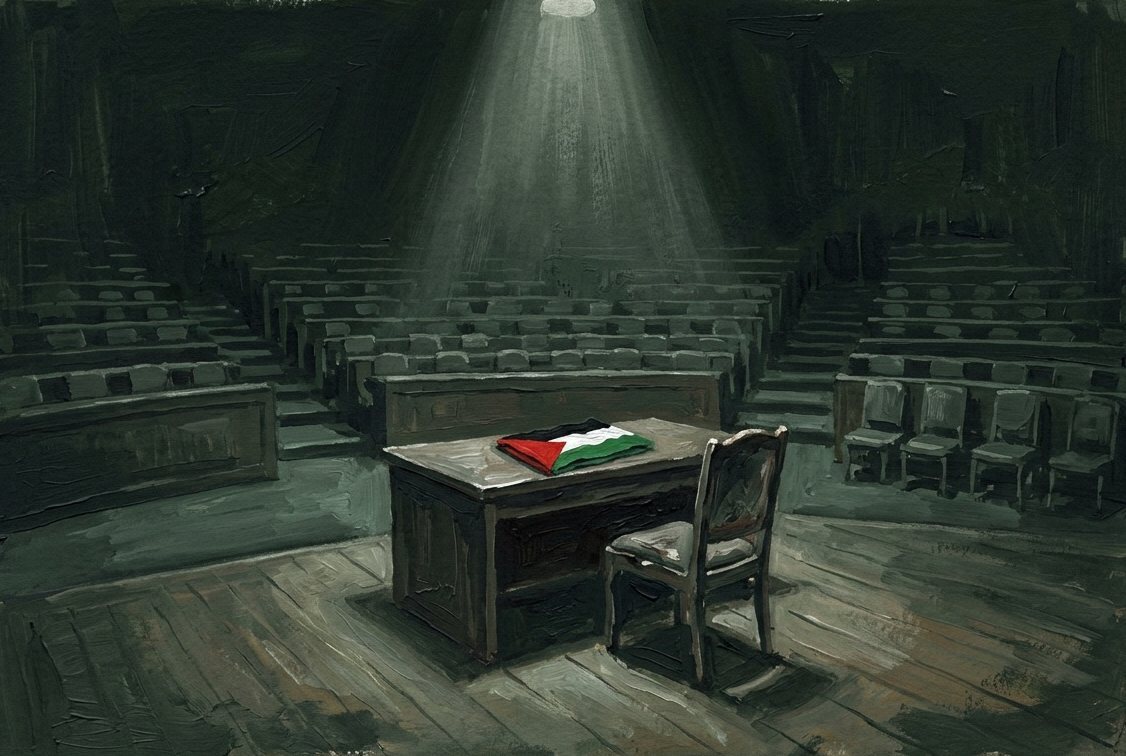
Illustration: an empty seat and a small folded flag in a dim assembly hall
The General Assembly

2012

A seat, not yet a state

On 29 November 2012, sixty-five years to the day after the partition vote, the UN General Assembly recognised Palestine as a non-member observer state, by 138 votes to 9. By late 2025 more than 150 of the UN's 193 members had recognised the State of Palestine, including the United Kingdom, France, Canada and Australia.

VII

Now

2023 to the presentThe darkest chapter yet.
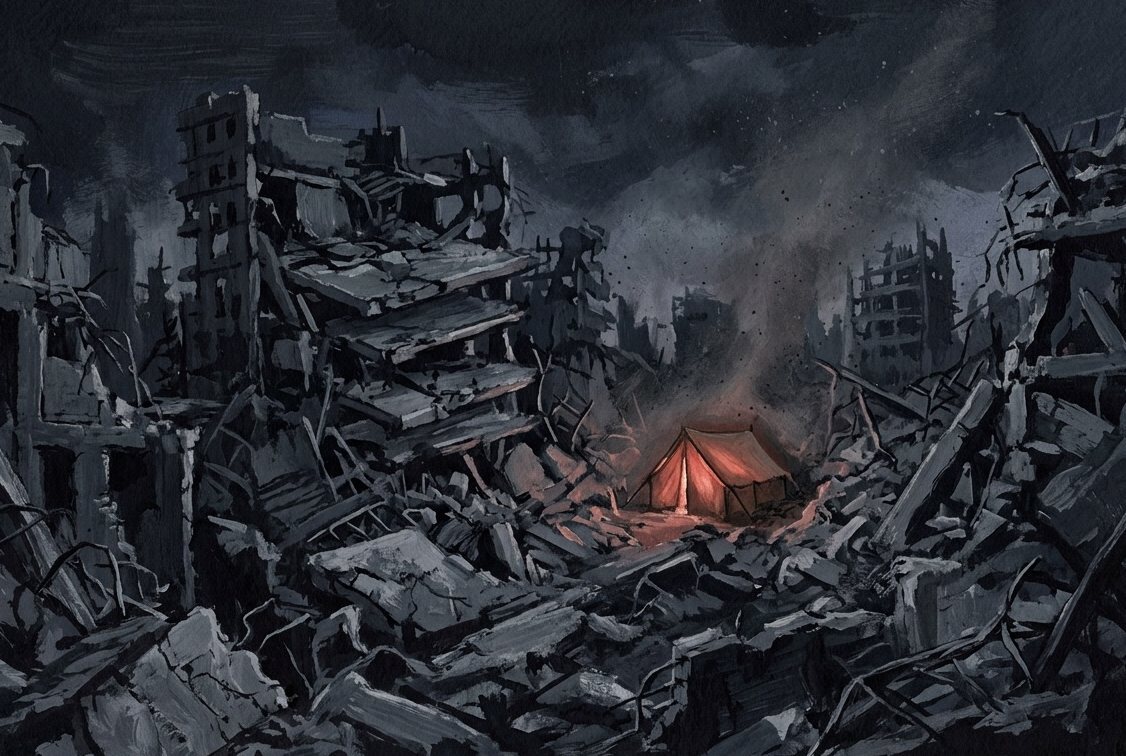
Illustration: a city reduced to rubble at night with a single lit tent
Gaza, 2024

2023

Gaza

On 7 October 2023 Hamas-led fighters attacked southern Israel, killing around 1,200 people and taking about 250 hostages. Israel's war on Gaza that followed killed more than 60,000 Palestinians by mid-2025, a majority of them women and children, according to Gaza's Ministry of Health, and displaced almost the entire population. In August 2025 the UN-backed IPC confirmed famine in Gaza governorate. The International Court of Justice ordered provisional measures in a genocide case brought by South Africa; the International Criminal Court issued arrest warrants for Israeli and Hamas leaders; a UN Commission of Inquiry concluded in September 2025 that Israel had committed genocide, a finding Israel rejects.

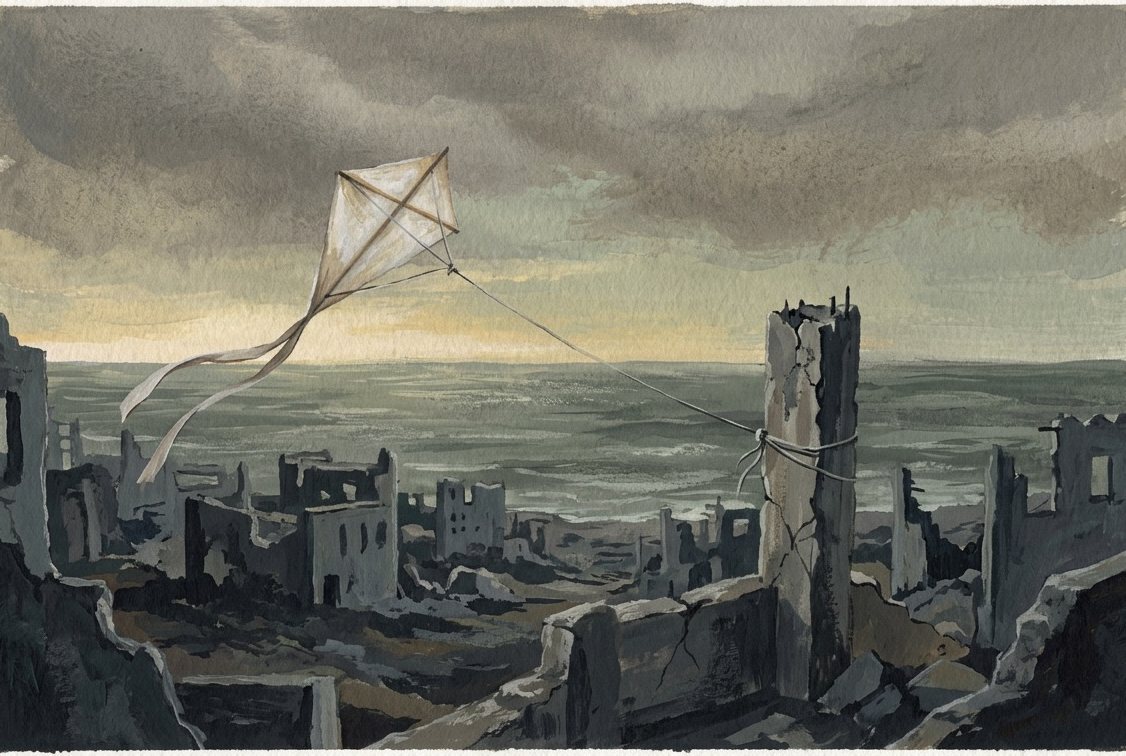
Illustration: first light over ruins by the sea, a kite tied to a broken pillar
First light, October 2025

2025

Ceasefire

A ceasefire took effect on 10 October 2025 under a US-brokered plan, and on 13 October the last living hostages were freed in exchange for Palestinian prisoners. Most of Gaza's homes, hospitals and schools were destroyed or damaged, and the UN put the rubble at tens of millions of tonnes. Strikes and deaths continued at a lower level in the months that followed. Nothing about the peace was settled.

The count

What has been recorded since 7 October 2023, as reported by Gaza's Ministry of Health and UN OCHA and compiled each day by Tech for Palestine. Figures as of 23 September 2026.

73,922

people killed in Gaza

20,179

of them children

12,500

of them women

174,995

injured

262

journalists killed

1,701

medical workers killed

1,123

killed in the West Bank, 240 of them children

Killed in Gaza, cumulative, by day

1,083 daily reports from the Ministry of Health. Where a day's report is missing, the series is carried forward. Hover or touch the line for a date.

20,00040,00060,00080,000 Jan 2024Jul 2024Jan 2025Jul 2025Jan 2026Jul 2026 Ceasefire, 10 Oct 2025 73,92223 September 2026
Show as a table
DateKilled, cumulative
7 October 2023 (First day)232
1 January 202421,978
1 July 202437,900
1 January 202545,553
1 July 202556,647
10 October 2025 (Ceasefire)67,211
1 January 202671,271
1 July 202673,070
23 September 2026 (Latest report)73,922

Ages of the named dead

Of the 72,835 people identified by name so far, 21,637 were under 18. The list runs to 7 May 2026 and lags the daily count. Hover or touch a bar for an age.

0102030405060708090100+
Under 18: 21,637
Age 29: 1,818
Show as a table
AgePeople
0 to 45,293
5 to 95,485
10 to 146,235
15 to 174,624
18 to 2919,360
30 to 4418,831
45 to 597,833
60 to 744,039
75 to 100 and over1,135

One mark for each person identified by name

72,835 marks, 200 to a row. The Ministry's own total is higher, at 73,922, and a study published in The Lancet in January 2025 estimated that even the Ministry's count of deaths from injuries up to June 2024 was about forty per cent short.

Each of them had a name. Read the names

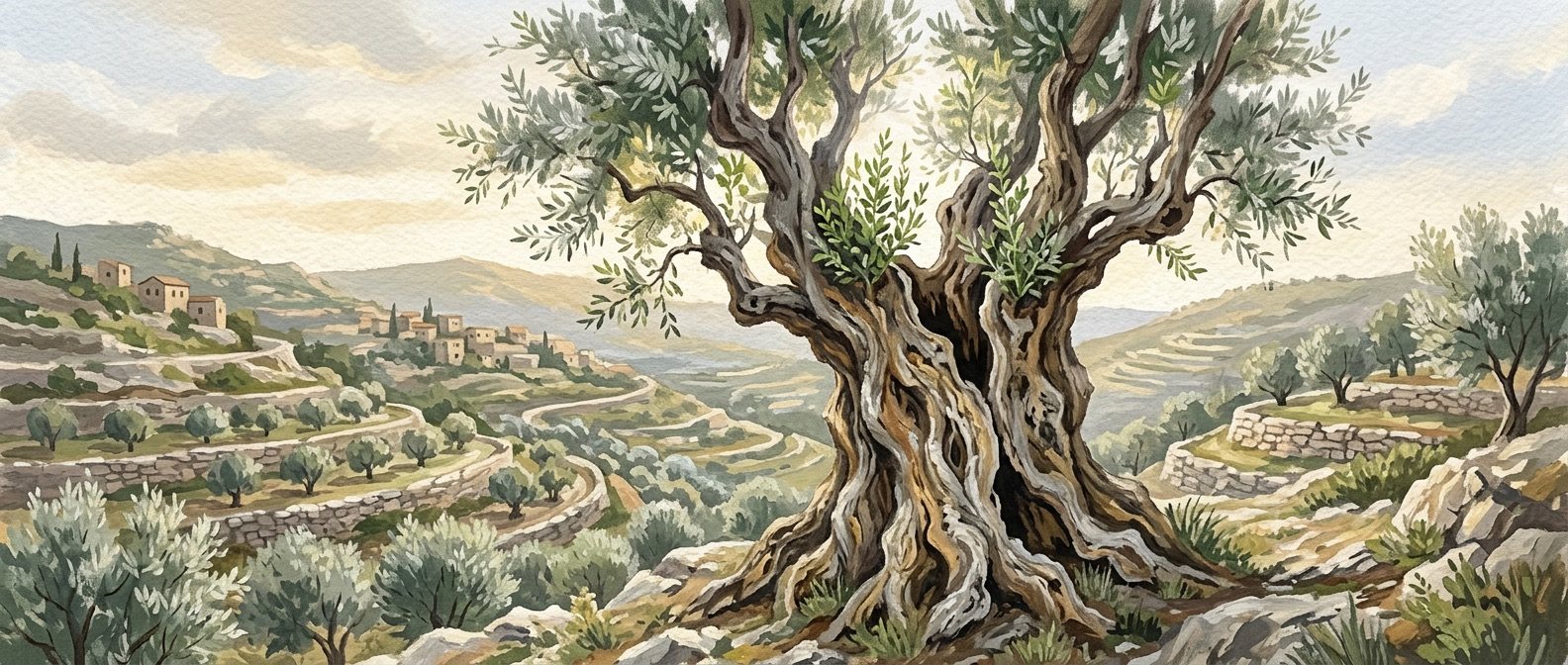
Illustration: an ancient olive tree with new green shoots in morning light

صمود

Sumud

Steadfastness. The key kept above the door. The olive tree that outlives whoever planted it, and whoever cut it down. Around fourteen million Palestinians are alive today, roughly half of them outside the land this page describes. The history is not over, and neither are they.